
What ID Do You Need for a Notary in California?
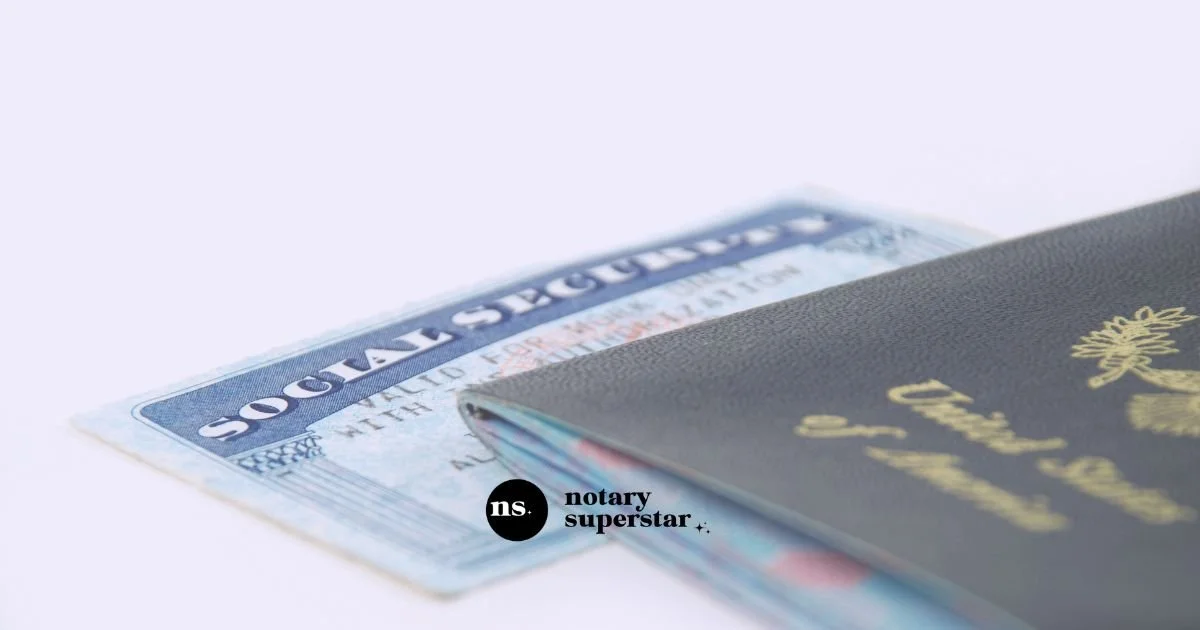
Before your appointment, you need to know exactly what counts as acceptable identification — and what doesn't. Here's a plain-language guide to California notary ID requirements so you arrive prepared.
Most people don't think much about notarization until they're sitting across from a notary, document in hand, and something goes wrong. The appointment stalls. The document can't be completed. The closing gets delayed.
Nine times out of ten, the problem comes down to identification. Either the signer didn't bring the right ID, the ID was expired, or the name on the ID didn't match the document. All of these are preventable — if you know what California actually requires.
You Must Appear in Person — No Exceptions
Before we get to the ID itself, there's one rule that overrides everything else: you have to physically appear before the notary. California does not allow remote notarization for standard documents the way some other states do. The notary needs to see you in person to confirm your identity, verify you're signing willingly, and make sure you understand what you're signing. No personal appearance means no valid notarization — full stop.
Acceptable ID for a Notary in California
California law requires what's called "satisfactory evidence" of identity. In practice, that means your ID needs to check four boxes: it must be issued by a government agency, include your photograph, include a physical description, include your signature, and be either current or issued within the last five years.
Commonly Accepted Forms of ID
California Driver's License
California State ID Card
Out-of-state Driver's License
U.S. Passport
U.S. Passport Card
U.S. Military ID
Foreign Passport (U.S. stamped)
Inmate ID (when applicable)
One important note: if your ID expired more than five years ago, it cannot be accepted — even if it otherwise looks valid. The same applies to IDs that are damaged, altered, or missing any of the required elements.
Make Sure Your Name Matches the Document
This is where a lot of appointments hit an unexpected snag. Your ID might be perfectly valid, but if the name on your ID doesn't match the name on the document — a missing middle name, a maiden name versus a married name, an abbreviated first name — the notary has to address it before proceeding.
If you've recently married, divorced, or changed your name for any reason, double-check that your ID and your document are consistent before you arrive. It's a much easier fix in advance than in the middle of a closing.
What If You Don't Have Acceptable ID?
California has a backup option called credible witnesses — people who personally know you and can vouch for your identity under oath. If the notary personally knows the witness, one is enough. If not, you'll need two. Either way, the witnesses must personally know you, have no financial interest in the document, and be willing to swear to your identity in front of the notary.
This is most commonly used in hospital settings, elder care facilities, or situations where someone genuinely cannot obtain standard identification. It's a legitimate path — but only when handled carefully and correctly.
Acknowledgments vs. Jurats — A Practical Difference
Not all notarial acts work the same way, and the type of document you're signing determines what's required.
For an acknowledgment — which covers most real estate and estate planning documents — you need to appear in person and have your identity verified. You're confirming the signature is yours and that you signed voluntarily. You do not have to sign in front of the notary. The critical requirement is identity verification, not witnessed signing.
A jurat is different. Used for affidavits and sworn statements, it requires you to sign in the notary's presence and take an oath or affirmation. If either step is skipped, the jurat is defective — which can invalidate the sworn statement entirely.
What Happens When ID Requirements Aren't Met
In a real estate context, improper identification can lead to a recording rejection, a required re-sign, or a funding delay. In estate planning, it can open the door to challenges about whether the document was executed properly — which can become expensive litigation years down the line.
The notary is the last neutral checkpoint before a document becomes legally operative. That's not a formality — it has real consequences when something goes wrong.
Before Your Appointment
Bring a current, government-issued photo ID. Confirm it was issued within the last five years if it's expired. Check that your name on the ID matches your name on the document. If there's a discrepancy, notify the notary in advance. And if you may need credible witnesses, give the notary a heads-up so they can prepare.
A few minutes of preparation prevents the kind of delays that ripple through a transaction or derail a closing. Show up with the right ID, confirm your name matches, and the rest is straightforward.
This article is provided for general informational purposes about California notary identification requirements. For guidance specific to your document or transaction, consult a licensed California notary or legal professional.
